- Event Series
Continuing in the spirit of 80 years of Social Work, we commit to wellbeing, social justice and human rights. 2023 Social Work Events Series features work of our outstanding colleagues who have been contributing greatly to the wellbeing of our society.
- Master of Social Work
Our Master of Social Work (MSW) offers you an outstanding postgraduate course of study, preparing you for professional practice in a diverse range of social work contexts Student life and experience as a Social Work student.
Enhancing well-being and self determination.
Research at the Department of Social Work
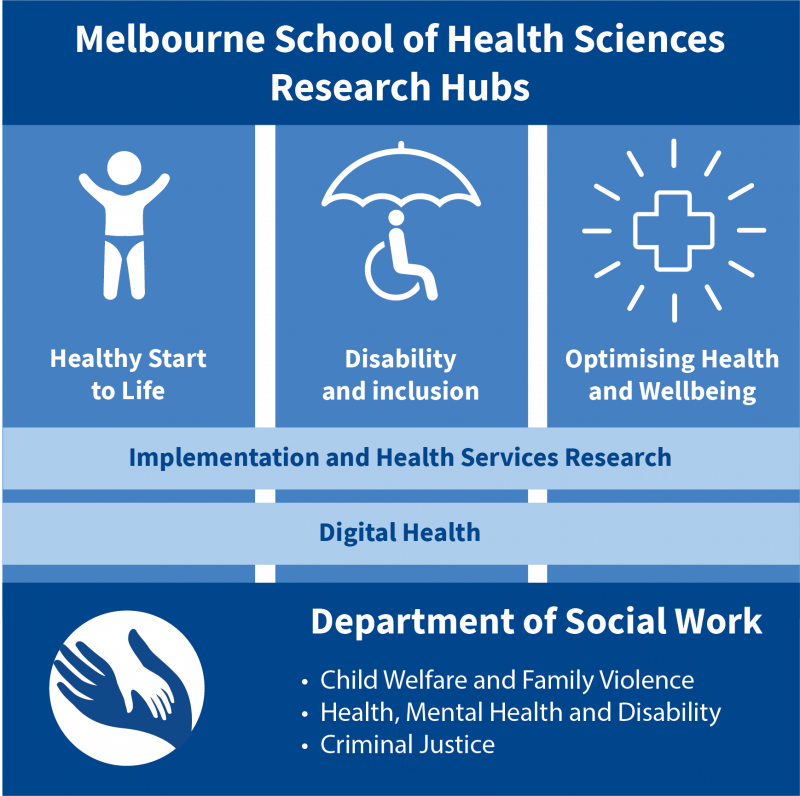
Our aim for research in the Department of Social Work is to optimise the health and wellbeing of the communities we serve. Our research aligns closely with the three School of Health Science research hubs:
In our Department, our research spans three complementary and intersecting themes:
Within these three priority areas we work across the innovation phases of discovery, implementation and evaluation. We seek to understand social challenges and lived experiences, develop and implement changes for the better practice and social policy reform, and evaluate the success of new initiatives.
-
Our researchers
Our researchers have reputations for excellence and impact in fields such as child protection and out-of-home care, family violence, trauma, disability and chronic disease, and community-based corrections. They have experience and specialised skills in qualitative methods, the use of administrative data and mixed method research designs and are experts in implementation approaches such as trials and action research and outcome evaluation designs. Our researchers connect their science and research findings to teaching and learning and research training.
-
Our approach
Our approach to research is to match research and evaluation designs to research questions to get the most useful insights, often working in a co-operative way with research partners from a range of disciplines.
We utilise Indigenous leadership to ensure our research advances the interests of Indigenous people and communities and fosters self-determination. We nurture emerging Indigenous leaders through our Graduate Research programs, collaborate with Indigenous organisations and enable Indigenous people to govern, design and carry out Indigenous research projects.
Our research is applied for relevance to our research end users and to create good for people and communities.
-
Our research funders
Our research funders are government agencies and philanthropic organisations as well as a wide range of non-government agencies that deliver health and human services. We stay connected to the research needs and priorities of our government and industry research end users through joint appointments and secondments and participation in cross-sectoral networks, committees and policy processes
-
Graduate research
Our Graduate Research and PhD programs strive to improve health and wellbeing through national and international collaboration. Underpinned by Indigenous leadership and methodological pluralism, the department aims to reinforce community ties and connect research to practice in areas of policy, teaching and training.
The School educates graduate entry and post-graduate students through accredited programs tailored to workforce needs nationally and internationally, enabling them to be competent and effective health professionals who are work ready and eligible for registration.
-
Degrees
Our graduate entry and post-graduate degrees are tailored to workforce needs nationally and internationally.
-
Short Courses
Expand your horizons by studying a single subject via the Community Access Program (CAP). CAP provides the opportunity to enrol in a single Health Sciences subject to study for general interest or to enhance your career development.
-
Scholarships, Bursaries and Prizes
The Faculty of Medicine, Dentistry and Health Sciences offer an extensive range of scholarships and bursaries to undergraduate and postgraduate coursework students.
Student Placements
Work-integrated learning, including placement, provides career-defining experiences for students and is integral to many programs within
the Faculty of Medicine, Dentistry and Health Sciences.
Rich collaborative relationships that foster strong research and teaching.
-
Alumni
In February 2007, The Social Work Department established a formal Alumni Association.
-
Giving
We are grateful for the many ways in which our alumni and donors support the work of the Faculty.
-
Partners
We have strong links with many of Victoria's most widely recognised social work bodies.
-
Community
Social work has a strong tradition of collaborative engagement. We have a strong alumni and we value highly our local, national and international relationships.

Join us in supporting the Len Tierney Social Work Travelling Award
Len Tierney Social Work Travelling Award is an annual scholarship bequeathed by the Tierney family to enable a Master of Social Work student to travel to the USA and engage in advanced direct practice training and specialisation.

Welcome to the Department of Social Work
Professor Lou Harms - Chair and Head of Social Work
Social Work, in the Melbourne School of Health Sciences, is a vibrant learning community which seeks to influence professional practice through high quality educational experiences for our students, the conduct of practice-based research and engagement.
History
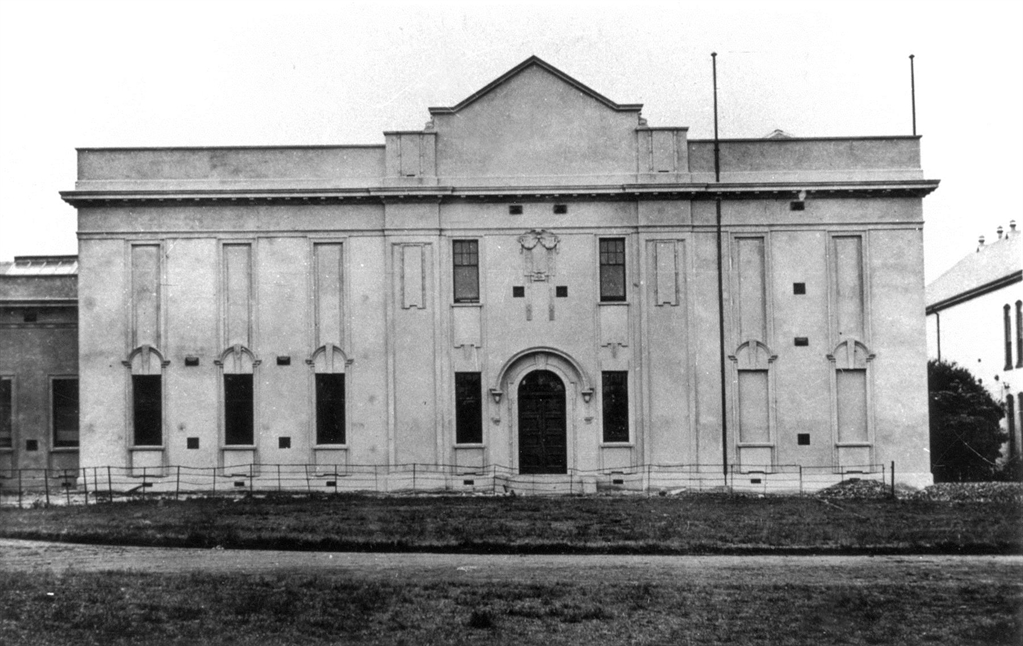
The Victorian Institute of Hospital Almoners was established in 1929. This is generally regarded as the beginning of Victorian social work education.

Our Vision
Social work education at the University of Melbourne has a long and distinguished history.